A major reading survey of more than 125,000 children and teenagers found that reading enjoyment rose in 2026 for the first time in four years, climbing to 36.1%, while daily reading in free time reached 20.3%. That small rise matters. It tells us something a lot of parents already suspect: when a child finds the right book, they read more. When they don't, they stop.
Here's the problem. Most parents don't freeze at a library shelf because they don't care about reading. They freeze because there are thousands of children's books in front of them, no map, and three different words being thrown around: age, genre, and reading level. Search "fantasy books for kids" online, and you'll get results for six-year-olds and sixteen-year-olds in the same list. It's no wonder book categories feel like a maze.
This guide sorts that maze into something usable. You'll get a plain explanation of genre versus age category, a full age-by-age roadmap from board books to young adult, a walk through every major fiction and non-fiction genre with real examples, and a practical method for matching any child, including a reluctant one, to a book they'll actually finish. Start with the next section on genre versus age category, then use the roadmap to find your child's starting point.
None of this requires a literacy degree. It just requires knowing which questions to ask, in which order, and having a starting shortlist for each answer. That's really all a genre guide is: a shortcut past the trial and error most parents go through on their own, one abandoned book at a time.
Book Genre vs Age Category: The First Thing to Get Right
Here's the mix-up almost every adult makes at some point: treating genre and age category as the same thing. They're not, and once you separate them, half the confusion disappears.
Genre describes the type of story. Fantasy, mystery, realistic fiction, biography and so on. Genre is about content and style. It has nothing to do with how old the reader is.
Age category describes the reader's developmental stage. Board book, picture book, early reader, chapter book, middle grade, young adult. Age category is about reading stamina, vocabulary, and how mature the themes are, not the type of story being told.
The reason this trips people up is simple: a single genre shows up in every single age category. Mystery isn't just a middle grade thing. It's a board book thing, a picture book thing, and a young adult thing too.
Genre | Picture Book Example | Middle Grade Example | Young Adult Example |
Mystery | A lost toy is found by following clues | A group of friends solves a neighbourhood puzzle | A teenager investigates a family secret |
Adventure | A trip to the moon and back before bedtime | A quest through a magical forest | A survival story after a plane crash |
Realistic Fiction | Starting daycare for the first time | Navigating a new school and a big move | Working through grief after a loss |
Once you see the pattern, searching gets a lot easier. Instead of typing "fantasy books for kids," try "middle grade fantasy" or "picture book fantasy." You'll land on genuinely age-appropriate options instead of a mixed bag.
Expert tip: Let your child choose the book, even if it looks a little below their reading level. Choice is the single strongest driver of reading motivation, and a book they picked themselves beats a book you picked every time.
One more thing worth saying plainly: age labels are a guide, not a rule. Two eight-year-olds can be years apart in reading maturity. Use the category as a starting point, then check the individual title against your own child rather than relying on the label alone.
This also explains why searching by genre alone so often goes wrong. Type "mystery books" into a search bar and you'll get results spanning a board book with lift-the-flap clues right through to a young adult thriller dealing with real danger. Neither result is wrong; they're just answering a different question than the one you meant to ask. Pair the genre with the age category every time you search, and the results narrow to something actually usable.
The Age-by-Age Genre Roadmap
This is the part you can screenshot. It maps each age category to the genres that tend to work best at that stage, with one example title to get you started.
Age Category | Typical Age Range | Best-Fit Genres | Example Title |
Board Books | 0 to 2 years | Concept books, nursery rhymes, gentle realistic stories, simple humour | Goodnight Moon |
Picture Books | 3 to 6 years | Fantasy, realistic fiction, fairy tales, informational picture books, humour | The Very Hungry Caterpillar |
Early Readers | 5 to 7 years | Realistic fiction, humour, simple mystery, graphic novel style early readers | Frog and Toad Are Friends |
Chapter Books | 6 to 9 years | Fantasy, adventure, mystery, realistic fiction, historical fiction | Magic Tree House |
Middle Grade | 8 to 12 years | Fantasy, science fiction, mystery, adventure, realistic fiction, historical fiction, mild horror, graphic novels | Harry Potter and the Philosopher's Stone |
Young Adult | 12 to 18 years | Realistic fiction, fantasy, science fiction, age-appropriate romance, horror, mystery, verse novels, graphic novels | The Hate U Give |
These ranges overlap on purpose. A confident seven-year-old might already be in chapter books while another is still happily in picture books, and both are completely normal. Use age as a starting point, use the "best fit genres" column as your shortlist when browsing, and treat every example title as a jumping-off point rather than the only option on the shelf.
Board books to picture books. Board books are built for babies and toddlers who need sturdy pages and simple, repeatable concepts. Picture books stretch further, with longer stories, richer language, and feelings a toddler is only just starting to name. The shift usually happens once a child can sit through a longer read-aloud and follow a simple plot from start to finish. If you're curious about how picture books are actually structured and why they work the way they do, it's worth reading up on what makes a picture book a picture book, since the format is more deliberate than it looks.
Early readers to chapter books. Early readers lean on controlled vocabulary, short sentences, and plenty of pictures to carry the story. Chapter books drop most of the illustrations and ask for more sustained attention. This transition tends to happen once a child can read independently for ten to fifteen minutes without getting frustrated, not on a fixed birthday.
Middle grade to young adult. Middle grade stays centred on friendship, family, and self-discovery, with romance and violence kept light. Young adult opens the door to heavier themes, older protagonists, and more complex emotional stakes. This shift depends far more on emotional maturity than on reading speed, which is why two twelve-year-olds can need very different books.
Core Fiction Genres Explained
These are the fiction genres you'll see again and again once you start browsing by genre instead of by age. Here's what each one actually means, in plain terms.
Fantasy. Stories set in imaginary worlds with magic, mythical creatures, or powers that don't exist in real life. Think of a young student who discovers a hidden magical school, or a kingdom under threat from a dragon. Fantasy tends to be the genre kids either fall hard for or bounce off completely, so pay attention to which reaction you're seeing before assuming a child "doesn't like reading." A child who bounces off fantasy often just needs a story grounded a little closer to the real world. If your child devours fantasy and you've ever thought about writing your own, our guide on how to write a children's book is a good place to start turning that spark into a draft.
Science fiction. Stories built around futuristic technology, space travel, or scientific ideas pushed a step further than reality. A kid who builds a robot to help solve a mystery on a space station is a classic science fiction setup for younger readers. Younger science fiction tends to lean playful rather than technical, so don't expect (or look for) hard science until a reader is well into middle grade or young adult.
Mystery. Stories organised around solving a puzzle, a crime, or a secret. A group of friends investigating strange happenings in their street is mystery at its simplest and most satisfying for a young reader. Mystery rewards attention to detail, which makes it a strong pick for a child who likes noticing things and being right about a hunch.
Realistic fiction. Stories set in the real world, with characters and events that could genuinely happen. A child starting at a new school, dealing with a friendship falling apart, or adjusting to a house move all sit here. This genre is a brilliant bridge for kids who say fantasy feels "too weird" or "not real," and it's often where a child sees their own life reflected on the page for the first time.
Historical fiction. Stories set during a specific period in history, blending real events with fictional characters. A child living through a major historical moment and finding their own courage inside it is the shape this genre usually takes. It's also one of the quieter ways to build real historical understanding, since the facts arrive wrapped inside a story a child actually wants to keep reading.
Horror. Stories designed to create suspense, unease, or a good, safe scare, often with something supernatural or psychological running underneath. For younger readers, this usually means a mildly spooky mystery in an old house rather than anything genuinely frightening. If a child re-reads the same spooky favourite over and over, let them. Repeated reading builds fluency and confidence; it isn't a sign they're stuck.
Adventure. Fast-paced stories built around action, quests, survival, or exploration. A treasure hunt or a wilderness survival challenge with a group of kids at the centre is adventure doing exactly what it's meant to do: keep pages turning. If a child struggles to sit still for slower genres, adventure is usually the safest place to start, since the plot itself does most of the work of holding their attention.
Non-Fiction Genres Explained
Fiction gets most of the attention in genre guides, which is a shame, because non-fiction is where a lot of reluctant fiction readers quietly become confident readers.
Biography. The true story of a real person's life, written for a young audience. A picture book biography of a scientist, an athlete, or an artist gives a child a real person to admire and, often, someone who looks or thinks like they do. Biography also does something fiction can't always manage: it shows a child that the achievements they're reading about were built by ordinary effort, not just talent, which is a genuinely useful thing for a young reader to absorb early.
Informational text. Books that explain facts, concepts, or how things work, usually supported by photographs, diagrams, and captions. A book about space, animals, or how machines work belongs here, and it's often the genre that finally hooks a fact-obsessed child who has never finished a novel. If a child spends more time asking "but why" than sitting through a bedtime story, informational text is very likely the genre they've been waiting for without anyone naming it for them.
Narrative non-fiction. True stories told with the pacing and tension of fiction. A gripping account of a real historical event or a scientific discovery reads almost like an adventure story, except every word of it actually happened. It sits in a useful middle ground for a child who enjoys the drama of a good story but has started to lose patience with anything they know is made up.
Emerging and Hybrid Formats
These formats have grown fast over the last decade, and they're some of the most engaging categories for young readers today, even though older genre guides barely mention them. If your child gravitates toward these over anything else, that's not a lesser form of reading. It's often the format doing exactly what it should: keeping a reluctant reader turning pages.
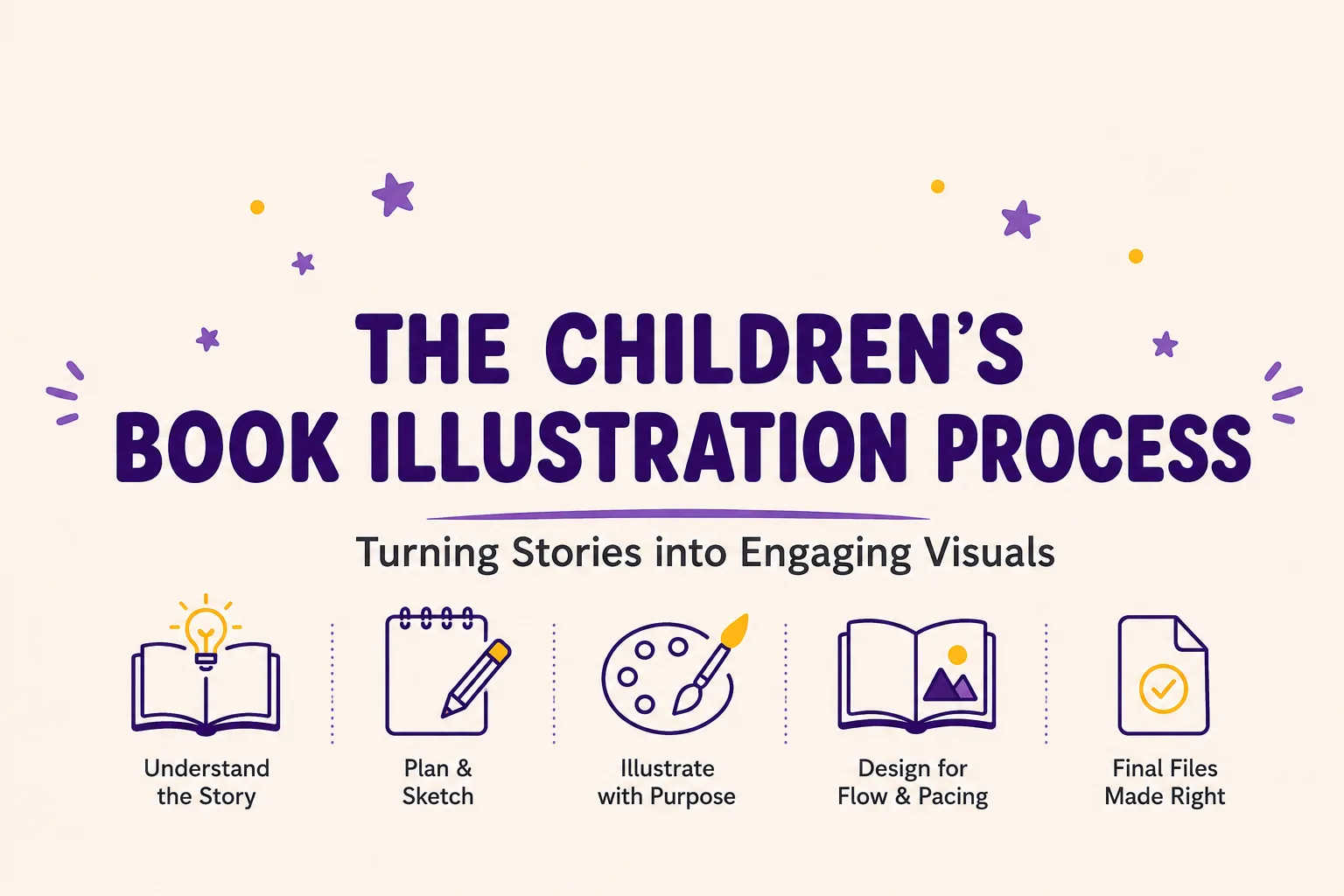
Graphic novels. Full-length stories told in comic book format, with panels, speech bubbles, and sequential art doing a lot of the storytelling work that plain text usually carries alone. A graphic novel about a kid superhero or a funny school story is a great starting point. Different illustrators bring completely different children's book illustration styles to this format, from soft watercolour to bold line art, and that variety is part of what makes graphic novels so appealing to kids who think of themselves as "not readers." If you want to see how illustration choices shape a story, our piece on children's book illustration goes into more detail.
Verse novels. Novels written in free verse or poetry, often carrying real emotional weight and moving at a fast pace despite the sparse text on each page. A verse novel about a child working through family change or identity can land harder, in fewer words, than a full prose novel covering the same ground.
Hybrid formats and genre blends. Books that mix genres or formats, like a graphic novel mystery, or a non-fiction picture book with fantasy elements woven through it. A book that blends diary entries, comics, and prose on the same page is a hybrid format doing exactly what it's designed to do: hold a reluctant reader's attention through variety.
These blended formats are also where a lot of the most interesting new children's publishing is happening. A straight prose novel asks a reader to stay engaged through pages of unbroken text, while a hybrid format changes the rhythm every few pages, mixing a comic panel with a paragraph with a list or a diagram. For a child who gets restless with any single format for too long, that variety alone can be the difference between finishing a book and abandoning it halfway through.
How to Match a Child to a Book Genre
Here's a five-step method that works whether you're standing in a library, a bookshop, or scrolling an ebook app at bedtime.
Step 1: Start with age and reading level. Identify the age category first, using the roadmap above as your shortlist.
Step 2: Identify interests and personality. Ask what the child already loves. Animals, sport, humour, mysteries, space, art, real-life stories. Then think about personality. Do they want fast action, quiet reflection, jokes on every page, or something with real emotional depth?
Step 3: Use the five-finger rule. Open the book to a page in the middle and have the child read it aloud. Hold up a finger for every word they don't know. Zero to one finger means the book is too easy. Two to three means it's a good fit. Four or five means it's too hard for independent reading right now, though it can still work brilliantly as a read-aloud.
Step 4: Try a genre gateway. Start with a series or format the child already loves, then suggest something similar in a neighbouring genre. This is how a Harry Potter fan quietly becomes a mystery reader, or a Dog Man fan becomes a realistic fiction reader, without ever feeling like they've been pushed. The genre-bridging table further down this guide gives you a handful of ready-made gateways if you want a starting point rather than working one out from scratch.
Step 5: Let the child choose. Offer two or three options within the right age and interest range, then let them pick. Choice is the strongest driver of reading motivation there is, full stop.
The Reluctant Reader's Genre Rescue Plan
Your child says books are boring. You've heard it a hundred times, and it stings a little every time, because you know reading matters and you don't know how to fix it.
Here's the reframe: "boring" almost never means the child hates reading. It usually means the genre, the format, or the reading level is wrong for them right now. Pushing harder on the same type of book rarely helps. Changing the type of book usually does.
Start with high-interest genres. Humour, graphic novels, adventure, and high-interest non-fiction tend to work best for reluctant readers, because short chapters, plenty of dialogue, and strong visual support all reduce the sense of effort a struggling reader feels.
Series and graphic novels are natural gateways. A series builds its own momentum, because once a child likes the first book, the next one is already waiting with a character they already know. Graphic novels lower the reading barrier without lowering the quality of the story, which makes them one of the fastest routes back into reading for a child who has switched off.
Pair a new genre with a topic they already love. A dinosaur-obsessed kid who won't touch fiction might take to a fantasy adventure featuring dinosaurs. A sport-mad kid who avoids novels might come around to a realistic fiction story about a young athlete. The interest stays constant while the genre quietly shifts underneath it.
Watch the format as closely as the genre. Two books in the same genre can feel completely different depending on chapter length, how much dialogue is on the page, and how much white space surrounds the text. A reluctant reader who struggles with dense paragraphs can often manage the same story just fine when it's broken into short chapters with plenty of dialogue, even before the genre itself changes at all.
Give it more than one try before writing off a genre entirely. A single book that didn't land isn't proof a whole genre is wrong for a child; it might just be the wrong book, the wrong moment, or the wrong length. If the second and third attempt in a genre also fall flat, that's useful information. One quiet afternoon with the wrong cover is not.
Reading Level vs Interest Level: Solving the Mismatch
One of the most common sources of frustration for parents isn't finding a genre. It's realising that reading level and interest level don't match, in either direction.
When a child reads above their age. A child can read at a level far beyond their age and still need age-appropriate themes and content. Look for books with a high reading level but middle grade or young adult themes rather than adult content dressed up in simple sentences. Every child is different here, so it's worth checking an individual title's content rather than assuming reading level alone tells you it's suitable.
When a child reads below their age. A child reading below their age still wants stories that match their interests and emotional maturity, not stories written for a much younger child. Look for high-interest books at a lower reading level, sometimes called "hi-lo" titles, that respect where they are emotionally while meeting them where they are as readers.
Read-alouds for above-level books. Reading aloud books that sit above a child's independent reading level lets them enjoy richer stories and bigger vocabulary without the frustration of decoding every word themselves. This builds listening comprehension and a taste for stronger writing long before independent reading catches up.
Checking reading level and content. A simple way to gauge fit is the five-finger rule from the previous section, combined with a quick skim of the back cover and first chapter for anything that feels out of step with your child's age. When in doubt, ask a children's librarian. They read constantly; they know what's actually inside a book beyond the blurb, and they're one of the most underused resources most parents have.
When the two mismatches happen at once. Occasionally a child reads well above their age but is emotionally younger than their reading level suggests, or the reverse, reading below their age while feeling emotionally older than their peers. In either case, treat emotional maturity as the deciding factor over pure reading ability. A book that's technically easy to decode but emotionally out of step will get put down just as fast as one that's too hard, so let content and tone guide the final choice rather than reading level alone.
Book Examples Across Every Genre and Age
A genre guide is only useful if it gives you somewhere to start looking. Here's a quick spread across the age categories.
For board books and picture books, look for a mix of classic titles alongside recent releases, and aim for a range of authors and characters so your child sees different kinds of families and experiences reflected on the page. A concept book like Chicka Chicka Boom Boom sits alongside a quieter realistic story like Ten Little Fingers and Ten Little Toes, and a fairy tale retelling gives an early taste of fantasy long before a child could read one independently.
For early readers and chapter books, look for a clear progression, from controlled vocabulary and heavy picture support toward longer chapters with fewer illustrations. Graphic novel style early readers are a great bridge here if a child is hesitant about "real" chapter books. Titles like Mercy Watson or the Elephant and Piggie series work well right at that boundary, and something like The Boxcar Children eases a confident early reader into a full chapter book with a plot to actually follow.
For middle grade, spread your search across fantasy, mystery, realistic fiction, historical fiction, and graphic novels, and lean into series starters where you can. A series builds its own reading momentum in a way a standalone book often can't. Wonder covers realistic fiction, The Wild Robot leans into science fiction with real heart, and a graphic novel series like Smile shows how far the format has come from simple comic strips.
For young adult, look across prose, verse novels, and graphic novels, and respect the wide maturity range this category covers. A book aimed at a twelve-year-old and a book aimed at an eighteen-year-old can both technically sit under "young adult," so check the content, not just the shelf label. Something like The Giver sits comfortably at the younger end, while a verse novel such as Long Way Down or a heavier realistic story pushes toward the older end of the category.
Try This: A Simple Genre Finder You Can Use Tonight
You don't need an app or a quiz website to do this. Ask three questions, in this order, and you'll land on a solid starting genre most of the time.
Question one: How old is the child, and roughly what's their reading level compared to their age? This narrows you down to an age category from the roadmap above.
Question two: what do they already love? Animals, puzzles, humour, real-life stories, space, sport. Hold that interest in mind; it matters more than the genre label.
Question three: what are their reading habits right now? Reading confidently at level, reading below level but wanting age-appropriate stories, or barely reading at all?
Here's how that plays out in practice. An eight-year-old who loves animals and reads a little below level often does best with animal adventure chapter books or graphic novels, since the visual support and the loved topic both lower the barrier at once. A twelve-year-old who loves puzzles and reads comfortably at level is a near-perfect match for middle grade mystery. A fifteen-year-old who loves real-life stories and reads above level tends to thrive with young adult realistic fiction or narrative non-fiction, where the reading level and the emotional maturity of the content finally line up. A five-year-old who loves silly humour and is only just starting to sit through a whole book usually does best with picture book humour or gentle rhyming stories, where the joke lands before attention wanders.
Run through those three questions for your own child, and you'll have a starting genre before you even reach the shelf. Write the answer down if it helps, since it's easy to default back to whatever genre you personally enjoyed as a child instead of the one that actually fits the reader in front of you.
If Your Child Loves This, Try That: A Genre-Bridging Guide
This is the table for the child who reads only one thing. It happens to almost every young reader at some point, and it isn't a problem to panic about. If your child only reads graphic novels, don't panic; that's a bridge, not a dead end.
If your child loves | Try this genre next | Why it works | Example title to start |
Harry Potter | Mystery | Both feature a young protagonist solving problems in a richly built world, minus the fantasy elements, so the puzzle-solving feel carries straight across | The Mysterious Benedict Society |
Dog Man | Realistic Fiction | Both lean on humour and relatable school and friendship situations, so the laughs stay while the format shifts from panels to prose | Clementine |
Percy Jackson | Historical Fiction | Both blend an ordinary kid with an extraordinary backdrop, so the sense of adventure survives the move from myth to real history | Number the Stars |
The Baby-Sitters Club | Verse Novel | Both centre on friendship and everyday emotional stakes, so a verse novel keeps that intimacy while trying a leaner, faster format | Love That Dog |
Diary of a Wimpy Kid | Graphic Novel Mystery | Both use humour and a strong visual layout to keep pages turning, so a mystery with the same energy feels like a natural next step | The Adventures of Beekle |
To use it, find the book your child already loves in the left column, read the genre suggested next to it and why it works, then use the example title as a starting point before letting your child make the final call.
From Reader to Writer: If This Sparks Something in You
If you've read this far, there's a decent chance you're not just choosing books for a child; you're also the parent, grandparent, or teacher who has quietly thought about writing one. It happens more than you'd expect. Reading enough children's books to notice the patterns in this guide is often exactly what pushes someone from "I have an idea" to "I should actually write this down."
Turning a genre you know into your own manuscript. If you've got a story idea but the words won't quite come together on the page, working with a professional writer can bridge that gap without losing your voice or your idea. Our ghostwriting service is built for exactly this, and if fiction is specifically what you're after, fiction ghostwriting focuses on shaping a story in the genre your own child already loves.
Bringing the story to life on the page. A picture book or early chapter book lives and dies on its illustrations, and matching the right style to your story matters more than most first-time authors expect. Our custom illustrations service pairs your manuscript with an art style that actually fits it, and if you're not sure where to start, our guide on how to choose a children's book illustrator in Australia walks through what to look for. Once the words and pictures are in place, a proper editing pass and a careful proofreading check catch the issues a manuscript almost always has after so many revisions, and book formatting gets everything sitting correctly on the page for print or ebook. The cover matters just as much as anything inside it, since it's the first genre signal a reader ever sees, and our book cover design service exists for exactly that reason. If you want a sense of what makes a cover work before you commission one, have a look at our notes on how to design children's book covers.
Getting the finished book into readers' hands. Once a manuscript is polished, the next question is usually how to actually publish it, and there's more than one route. Our book publishing service walks authors through the full process, and if you're weighing up your options first, our guides on how to find a children's book publisher and what hybrid publishing for children's books actually costs are worth reading before you commit to a path. From there,children's book printing turns a finished file into something a child can actually hold, and once it exists in the world, an author website and a proper book promotion plan make sure it finds readers rather than sitting quietly on a shelf.
None of this has to happen at once, and it doesn't have to happen at all. But if choosing books for a child has ever made you think about writing one yourself, Purple Giraffe Press exists for that exact moment.
Ten Small Habits That Expand a Child's Reading World
A few habits, practised consistently, do more for a child's reading life than any single book ever will. None of these require extra time in the day; they mostly just require doing what you're already doing a little differently.
Let choice lead. A book they picked, even one below their level, beats a book you picked every single time.
Use series as gateways. Once a child loves one series, a similar series in a neighbouring genre is the gentlest way to widen their range.
Read aloud above their level. It builds vocabulary and a taste for richer stories long before independent reading catches up.
Pair new genres with existing interests. A loved topic dropped into an unfamiliar genre keeps the interest constant while the genre quietly shifts.
Use graphic novels as bridges. They lower the barrier for reluctant or struggling readers without lowering the quality of the story.
Apply the five-finger rule before committing to a book, so you catch a poor fit before frustration sets in.
Don't ban comfort reads. Re-reading a favourite builds fluency and confidence; it isn't a step backward.
Follow interests over reading level. Interest level matters more than reading level for genuine engagement.
Ask a children's librarian. They know the collection and what actually hooks young readers better than any algorithm.
Model reading yourself, and talk about what you enjoy in different genres. Children copy the reading habits they see at home.
Conclusion
Genre is the type of story. Age category is the reader's developmental stage. Matching a child to the right book means weighing both of those alongside their interests and reading level, not treating any one of them as the whole answer.
The goal was never to force a genre onto a reluctant reader, or to rush a child into "harder" books before they're ready. It's to help a child find books they genuinely want to keep reading, at whatever pace that happens.
Three things to do this week: use the age-by-age roadmap above to find your starting point, run your own child through the three genre finder questions, and if you're still unsure, ask a children's librarian for a personalised recommendation. Then pick one new genre to try, and let the child choose the actual book.
It's worth remembering that this isn't a one-time decision. A child's genre preferences shift as they grow, sometimes gradually and sometimes overnight after a single book that hits at exactly the right moment. Revisit this roadmap every year or two, not just once, and treat every "boring" comment as useful information rather than a verdict on reading itself.
Ready when you are
Let's bring your children's book to life.
From a first idea to a finished book children adore, we are with you at every step. Tell us about your story and we'll reply within one business day.
Start Publishing →